

Coding is a skill set that is tremendously valuable in the modern digital age. Suppose you learn a programming language with utility in one of the many different computer world sectors. In that case, you can be sure to find work and make a name for yourself in the emerging digital economy.
There won’t be any workforce shortage for an aspiring programmer anytime soon, from Big Silicon Valley companies to tech start-ups.
Today, I have compiled a list of books most highly regarded amongst programmers as the best learning resources for programming. Some of the books on this list will be for beginners, while others will help those who are already familiar with programming and want to learn specialized topics that will help them in their programming careers.
10. Cracking the Coding Interview
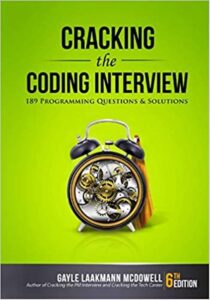
Author: Gayle Laakman McDowell
Published: 2008
The first book on our list is not precisely about programming itself but the step that comes after. Written by Gayle Laakman McDowell, Cracking the Coding Interview explores the many questions that recruiters ask when you show up for an interview for a programming position.
Key Features:
- 189 programming interview questions, ranging from the basics to the trickiest algorithm problems.
- A walk-through of how to derive each solution so that you can learn how to get there yourself.
- Hints on how to solve each of the 189 questions, just like what you would get in a real interview.
- Five proven strategies to tackle algorithm questions so that you can solve problems you haven’t seen.
- Extensive coverage of essential topics, such as big O time, data structures, and core algorithms.
- A behind the scenes look at how top companies like Google and Facebook hire developers.
- Techniques to prepare for and ace the soft side of the interview: behavioral questions.
- For interviewers and companies: details on what makes a good interview question and hiring process.
Get it from here.
9. Design Patterns
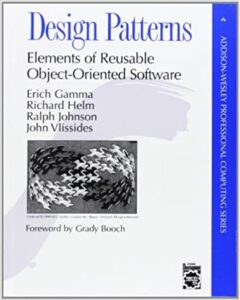
Author: Erich Gamma
Published: 1994
Don’t be fooled by this book’s old publishing date. Design patterns written by Erich Gamma is as relevant today as it was in the early 90s. This is not so much a programming tutorial book as it a book concerned with recognizing and solving common problems in software design.
Key Features:
You will learn about the following significant patterns and how to identify them.
- Creational patterns and how to identify and solve them.
- Abstract Factory Pattern
- Builder Pattern
- Factory Method Pattern
- Prototype Pattern
- Singleton Pattern
- singleton pattern
- Adapter Pattern
- Structural pattern
- Strategy pattern
8. Working Effectively with Legacy Code
Author: Michael C. Feathers
Published: 2004
This book gives programmers the tools to cost-effectively solve common legacy code problems without going through the daunting task of rewriting all existing codes from scratch.
Key Features:
- Learn about common legacy code problems and how to handle them.
- Learn how to bring your existing software under control via useful strategies.
- Learn how to write tests that can be used to make sure that developers are not unintentionally changing the application as they optimize it.
- Examples are provided for Java, C++, and Csharp languages.
Get it from here.
7. The Clean Coder
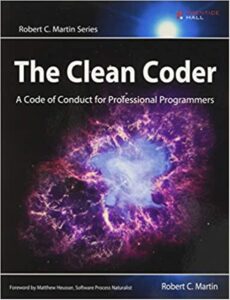
Author: Robert Martin
Published: 2011
This book is precisely what the title claims. The professional programmer’s bible on how to approach software development with honor, self-respect, and price. It has timeless advice from an industry expert that has helped countless people with their careers.
Key Features:
- What it means to behave as a true software craftsman
- How to deal with conflict, tight schedules, and unreasonable managers
- How to get into the flow of coding and get past writer’s block
- How to handle unrelenting pressure and avoid burnout
- How to combine enduring attitudes with new development paradigms
- How to manage your time and avoid blind alleys, marshes, bogs, and swamps
- How to foster environments where programmers and teams can thrive
- When to say “No”–and how to say it
- When to say “Yes”–and what yes really means
Get it from here.
6. Soft Skills: The software developer’s life manual
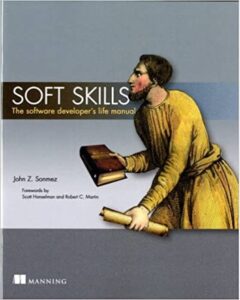
Author: John Sonme
Much like the previous book on this list, Soft Skills by John Sonme is a programmer’s handbook that offers techniques and practices for a more satisfying life as a professional software developer.
Published: 2014
Key Features:
- Boost your career by building a personal brand
- John’s secret ten-step process for learning quickly
- Fitness advise turning your geekiness to your advantage
- Unique strategies for investment and early retirement
Get it here.
5. Head First Design Patterns
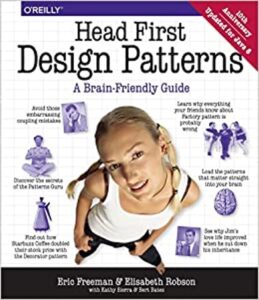
Author: Eric Freeman
Published: 2004
The fifth book on our list has to do with recognizing design patterns and how to solve them. This book’s idea is that programmers worldwide at different intervals have come across the same sort of problems while programming, and some of these people have solved many of the issues on their own. This book offers those solutions that enable you to create functional, elegant, and reusable software.
Key Features:
- Avoid embarrassing coupling mistakes
- Learn why traditional factory patterns are wrong.
- Discover the secrets of patterns guru.
- Find out how Starbucks Coffee doubles their stock price with the decorator pattern.
Get it from here.
4. Refactoring: Improving the Design of Existing Code
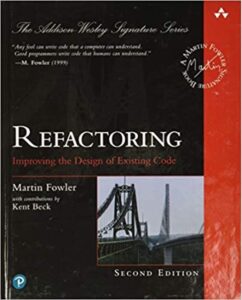
Author: Martin Fowler
Published: 1999
Martin Fowler’s Refactoring is all about improving the design of existing Code and how to enhance software maintainability and make existing Code easier to understand.
Key Features:
- Understand the process and general principles of refactoring
- Quickly apply useful refactorings to make a program easier to comprehend and change
- Recognize “bad smells” in Code that signal opportunities to refactor
- Explore the refactorings, each with explanations, motivation, mechanics, and simple examples
- Build reliable tests for your refactorings
- Recognize tradeoffs and obstacles to refactoring
Get It from here.
3. Code Complete: A Practical Handbook of Software Construction
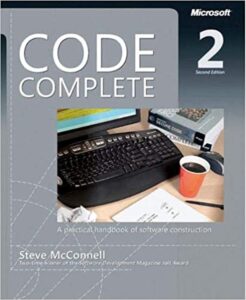
Author: Steve Mcconnell
Published: 1993
Code Complete is one of those books that are a must-read for a given industry. Although written in 1993, Code Complete has been revised twice to keep it relatable to the ever growing programming market. This book contains hundreds of new code samples that illustrate the art and science of software development.
Key Features:
- Design for minimum complexity and maximum creativity
- Reap the benefits of collaborative development
- Apply defensive programming techniques to reduce and flush out errors
- Exploit opportunities to refactor—or evolve—Code, and do it safely
- Use construction practices that are right-weight for your project
- Debug problems quickly and effectively
- Resolve critical construction issues early and correctly
- Build quality into the beginning, middle, and end of your project.
Get it from here.
2. Clean Code: A Handbook of Agile Software Craftsmanship
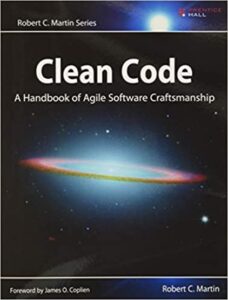
Author: Robert C. Martin
Published: 2008
This is the second book from Robert C Martin on this list. Clean Code is a valuable gem for those programmers who want to learn the difference between good and wrong Code and how to transform the former into the latter. It is divided into three parts. The first part describes the principles of writing a clean Code. The second part contains several case studies. The third part contains the list of heuristics and “smells” gathered while creating the case studies.
Key Features:
- How to tell the difference between good and lousy Code
- How to write right Code and how to transform wrong Code into right Code
- How to create good names, useful functions, suitable objects, and practical classes
- How to format Code for maximum readability
- How to implement complete error handling without obscuring code logic
- How to unit test and practice test-driven development
- What “smells” and heuristics can help you identify wrong Code
Get it from here.
1. The Pragmatic Programmer
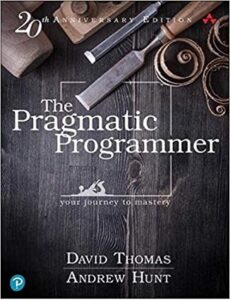
Authors: David Thomas and Andrew Hunt
Published: 1999
Initially published in 1999, The pragmatic programmer is an influential book that has helped countless programmers create clean and functional Code. The great thing is that it is independent of any particular language, framework, or methodology. It has advice that applies to multiple scenarios and workflows irrespective of programming language.
Key Features:
- Fight software rot
- Learn continuously
- Avoid the trap of duplicating knowledge
- Write flexible, dynamic, and adaptable Code
- Harness the power of essential tools
- Avoid programming by coincidence
- Learn real requirements
- Solve the underlying problems of concurrent Code
Get it from here.